Prof. Colin Eden On Bringing An International B-school Experience In India And Importance Of Accreditations Through SSBS
Online, December 4, 2011 (Newswire.com) - Prof. Colin Eden, Vice Dean and Director of International Division of Strathclyde University.
"Call me Colin," he tells his students. "If you don't, I won't answer. When they call me 'sir', I don't answer!" he laughs.
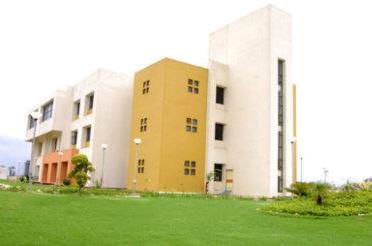
He spent some time with us discussing the ins and outs of management schools. He talked about what sets Strathclyde apart from all the other global B-Schools, at their Indian arm in Noida - Strathclyde SKIL Business School (SSBS). SSBS is in association with the SKIL group.
Students must give more weight to accreditations compared to rankings: Accreditations are really difficult to come by and it takes lots of paperwork and documentation. All three that we have - Association of MBAs (AMBA), Association to Advance Collegiate Schools of Business (AACSB) and European Quality Improvement System (EQUIS) - are demanding. There are several stages to an accreditation. First you 'put your hand up and say, 'we'd like to be accredited' and each of them might say 'you don't stand a chance so don't bother yet,' or they might say 'yes, it looks like it might be worth trying', so you go to the next stage, which is a submission of a massive amount of documentation, describing all the quality processes, the history of the School, the way exams are held, etc. If you get through that stage, a panel visits. They come and the make sure you told the truth and are not hiding things. Usually they stay for three days. They meet with students, staff, alumni, employers... they are concerned with the quality of the education given to students. It is a very thorough game. The panel of three Deans from other Business Schools can be from right across the globe.
Rankings are very volatile. A university one year can be ranked 50, the next year, it can get ranked 80, or vice-versa. Things cannot change that rapidly in the academic world. There can be very tiny gaps in ratings between rankings.
SSBS started with a post graduate programme - MSc in Management, designed for the Indian market and it has global accreditations, including AMBA.
Prof.. Colin Eden on selecting faculty pool in India that is at par with Strathclyde: It has not been easy. In India, good faculty for B-Schools are hard to find. Strathclyde has stringent criteria when hiring staff. The staff in India have to be research active themselves, and have to have a good publication record, and a commitment to research. There is a need in India for research led institutions.
Indian faculty will be integrated with the Glasgow faculty: All faculty that are employed at SSBS would be associated with the University of Strathclyde in Glasgow. Whatever is being done in India would have to represent the quality of what is being done in Glasgow, so it would be exactly the same in terms of quality. In every respect every member of staff here are members of the staff of Strathclyde, in Glasgow. They become a part of the academic community in the department of their own subject area and spend time in Glasgow.
Student exchange will evolve with more students from Strathclyde's other campus coming to India and also Indian students exploring our other campuses: A significant objective is for our students in Glasgow to learn about India and vice versa. For the students it is an important experience to learn about different cultures.
Going forward, students based here might do part of their studies at our campuses in Singapore, Hong Kong, Kuala Lumpur, or Dubai, Abu Dhabi, Muscat, and Bahrain. Students based in those countries can come here. For example, a student studying Supply Chain Management in Abu Dhabi can come and spend some of their time doing an elective at SSBS. We hope to get a lot of international mixing. For electives, you finish up sitting in a room with people from all of the other campuses, all of whom have an interest in that particular subject. I can think of three businesses started as a result of people meeting from different parts of the world in an elective class.
Strathclyde's USP of focusing on research and industry interaction: Research and Industry interactions are both equally important for both faculty who teach students and for the students themselves. Our students devote a significant part of 2nd year to an industry project.
In any education, you learn 50% from the programme and the other 50% from your colleagues. Students challenge each other, have group discussions, argue, research and debate. They need to think fast, argue, look for good data to support their arguments. They need evidence to solidify their cases. When they leave an institute it is with an ability to become effective managers and decision makers. Accrediting agencies look at the style of education as well as the knowledge imparted - they look at how the students challenge the staff and one anotherr.
Our whole business is about how theory relates to practice and how practice helps develop theory. Every time we put a member of staff in front of the students, they know the extent to which the theory is useful in practice. As international scholars we also develop theory from our investigation and involvement in practice.
Share:
Tags: business school in india, ssbs, Strathclyde Business School, Strathclyde SKIL Business School